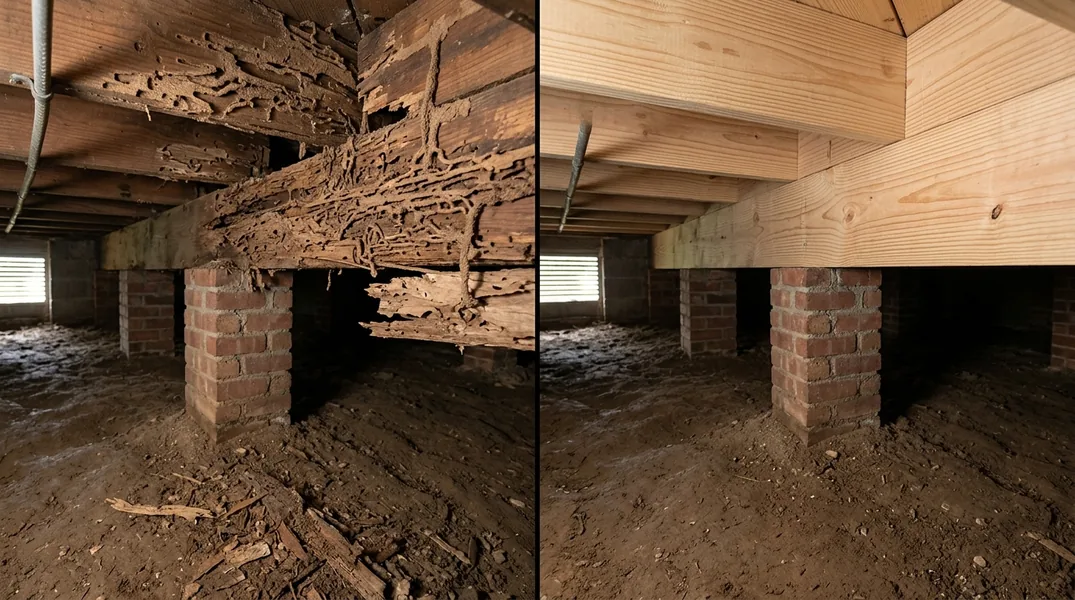
Understanding Wood Rot vs. Termite Damage: What's the Difference?
When you discover soft, discolored wood on your home, your first instinct might be panic. But before you assume the worst, it helps to understand what you're actually dealing with. Wood rot and termite damage are two distinct problems that require different approaches, though they sometimes occur together.
Wood rot is caused by fungi that feed on the cellulose in wood, breaking down its structure over time. It thrives in moist environments and typically spreads slowly but steadily if left untreated. Termite damage, on the other hand, is caused by insects that tunnel through wood, leaving it hollow and weakened. Termites can cause extensive damage quickly, sometimes going unnoticed for months or years. Both problems compromise your home's structural integrity, but the repair strategy often differs. That's why the first step in any restoration project is a proper diagnosis, which is why many homeowners in Murfreesboro call in professionals to assess the extent of the damage before making repair decisions.
When Can You Repair Rotted Wood Without Replacing It?
The good news is that not every instance of rotted wood requires complete replacement. Minor surface rot, where the damage is shallow and hasn't penetrated deep into the wood's core, can often be repaired using specialized epoxy fillers and wood hardeners. This approach works best when the rot is caught early and the structural integrity of the wood remains largely intact. If you notice soft spots on exterior trim, siding corners, or window frames, these are often candidates for repair rather than replacement.
The Wood Rot & Dry Rot Repair process for minor damage typically involves removing the affected wood, treating the area with fungicide, applying epoxy filler, and then sealing everything to prevent moisture from returning. This method is cost-effective and preserves the original character of older homes. However, this approach only works if the rot hasn't spread into the structural framing or compromised more than about 10 to 15 percent of the wood member. If rot has penetrated deeper or affected load-bearing elements like floor joists or beams, replacement becomes necessary for safety reasons.
When Replacement is the Only Safe Option
Structural wood rot is an entirely different matter. If decay has reached the interior of load-bearing members like rim joists, sill plates, or support beams, replacement is not optional. It's a safety requirement. Wood that has lost its structural capacity cannot be trusted to support your home's weight, and attempting a repair-only approach could lead to settling, sagging floors, or worse. This is particularly important for homeowners in Murfreesboro who may be dealing with moisture issues from our humid climate.
Similarly, Termite Damage Repair often requires replacement rather than repair. Because termites hollow out wood from the inside, the damage is rarely visible until it's extensive. A wood member that looks solid on the outside might be 80 percent compromised internally. When you tap it with a screwdriver and it crumbles, replacement is the only responsible solution. For severe cases affecting multiple areas or structural elements, you may need Beam Replacement & Load-Bearing Wall Removal services to ensure your home is safe and properly supported.
Wood Rot Repair Cost in Murfreesboro: What to Budget
Understanding pricing for wood rot repair is essential for homeowners planning their budgets. Minor repairs using epoxy fillers typically range from $300 to $1,500, depending on the size of the affected area and accessibility. These are relatively affordable fixes that can prevent much larger problems down the road. However, if the rot has spread to structural elements or requires replacing significant portions of wood, costs can escalate quickly.
Structural repairs, such as replacing rotted Floor Joist & Subfloor Repair, typically range from $2,000 to $10,000 or more, depending on how many joists need replacement and whether the subfloor is involved. Replacing exterior wood siding can run $1,500 to $5,000 per section, while severe structural damage affecting beams or foundations might exceed $15,000. The wide range reflects variables like the extent of damage, the type of wood being replaced, labor complexity, and whether additional issues are discovered during the repair process. Getting a detailed assessment from a qualified contractor is the only way to know your actual costs. If you'd like a transparent evaluation, Murfreesboro Carpentry offers a free estimate so you can plan accordingly.
The Hidden Costs of Delaying Repair or Replacement
Many homeowners hesitate to address wood rot or termite damage because of the upfront cost. This delay often turns out to be a false economy. Wood rot spreads, termites multiply, and structural damage compounds. A small area of rot that could have been repaired for $500 might spread to require $5,000 in replacements if left unaddressed for a year or two. Similarly, a termite colony discovered early might be contained with targeted treatment, but years of infestation can compromise entire sections of your home's frame.
Beyond the direct repair costs, delaying treatment can affect your home's resale value, create safety hazards for your family, and eventually lead to foundation settling or other secondary damage. The longer you wait, the more expensive and disruptive the eventual repair becomes. If you suspect wood rot or termite damage in your home, the smartest financial decision is to have it assessed promptly. Call Murfreesboro Carpentry at (629) 219-2900 to discuss your concerns and get a clear picture of what you're dealing with.
Making the Repair vs. Replace Decision: A Practical Approach
The decision between repair and replacement should be based on three key factors: the extent of the damage, the structural importance of the affected wood, and the long-term cost-benefit analysis. A qualified carpenter can help you weigh these factors by performing a thorough inspection and providing honest recommendations. Sometimes repair is the right choice because it's sufficient and economical. Other times, replacement is the only safe and sensible option, even if it costs more upfront.
The best approach is to act quickly when you notice signs of rot or pest damage, get a professional assessment, and follow the contractor's recommendations. Trying to save money by choosing repair when replacement is needed can create liability issues and ongoing problems. Conversely, replacing wood that could have been safely repaired wastes money unnecessarily. A contractor with experience in both repair and replacement methods can guide you toward the decision that best protects your home and your wallet. If you're facing this decision in your home, reach out to Murfreesboro Carpentry for expert guidance and a comprehensive evaluation of your options.
Looking for a professional carpentry contractor in Murfreesboro? Murfreesboro Carpentry responds fast for all your carpentry needs.
Get a Free QuoteOur services: Wood Rot & Dry Rot Repair · Termite Damage Repair · Floor Joist & Subfloor Repair