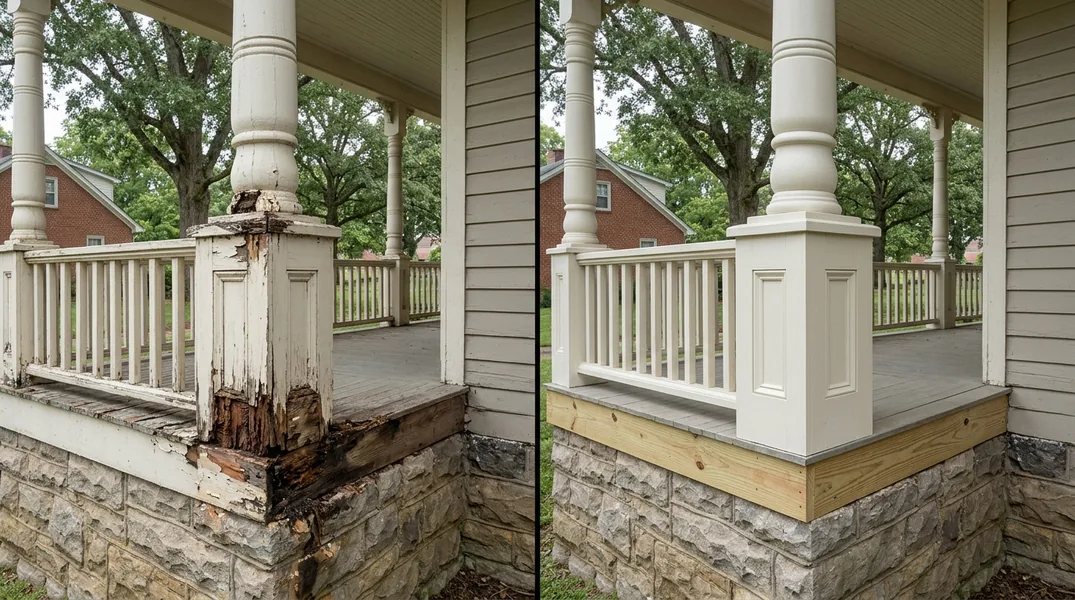
Why Murfreesboro's Historic Homes Face Unique Wood Challenges
If you own a Victorian on East Main Street or a charming craftsman bungalow near MTSU, you already know there's something special about older homes. They have character, solid bones, and architectural details you simply cannot replicate in new construction. But that charm comes with a responsibility: these homes were built in an era before modern moisture barriers, treated lumber, and advanced ventilation systems. Murfreesboro's humid Tennessee climate creates the perfect storm for wood deterioration.
The reality is that wood rot and dry rot don't discriminate between a 120-year-old Victorian and a 90-year-old bungalow. Both are vulnerable if moisture finds its way into the structure. Unlike newer homes built with pressure-treated lumber and vapor barriers, historic properties rely on solid wood framing that absorbs and holds moisture like a sponge. When water infiltrates through aging roofs, failed caulk, or compromised siding, the wood begins to break down from the inside out. Understanding this risk isn't meant to scare you, but rather to empower you to act before small problems become expensive ones.
The Hidden Threat: How Dry Rot Differs from Wet Rot
Many homeowners use the terms 'wood rot' and 'dry rot' interchangeably, but they're actually different problems with different causes and solutions. Wet rot occurs when wood stays consistently damp, usually from obvious water sources like leaks or poor drainage. You'll often see it as soft, crumbly wood near the damage source. Dry rot, on the other hand, is far more insidious. It's a fungus that thrives in wood with just 20 to 50 percent moisture content, and it can spread rapidly through a home without you knowing it's there.
The danger of dry rot is that it can travel through walls and across structural members, leaving a trail of weakened wood in its wake. A Victorian home with old plaster walls might hide dry rot for years while it silently compromises floor joists, beams, and wall studs. By the time you notice soft spots or discoloration, the damage may have already spread significantly. This is why Wood Rot & Dry Rot Repair should never be a DIY project. Professional assessment and treatment require specialized knowledge to identify the fungus, stop its spread, and replace compromised wood before it affects the home's structural integrity.
Wood Siding Repair: The First Line of Defense for Your Historic Home
Your home's exterior siding is like the skin of your house, and for Victorians and bungalows, that siding is often original wood. Whether it's narrow lap siding, shiplap, or decorative shingles, wood siding is beautiful and authentic, but it requires honest maintenance. Paint failure, gaps between boards, and missing caulk are the most common culprits that allow water to penetrate behind the siding and into the wall cavity where it causes rot to develop.
Wood siding repair isn't just about aesthetics. When you address peeling paint, seal cracks, and replace damaged boards promptly, you're preventing moisture from ever reaching the studs and structural members inside. Many homeowners in Murfreesboro find that regular siding maintenance, including repainting every 5 to 7 years and caulking gaps annually, adds decades to their home's life. If you notice soft spots when you press on the siding, or if boards are cupping or splitting, that's a sign that water has already breached the surface. At that point, you need professional evaluation to determine whether the damage is limited to the siding itself or if it has penetrated deeper into the wall structure.
Floor Joist and Subfloor Damage: Why Sagging Floors Matter
One of the most common structural problems in older homes is floor damage caused by wood rot in the joists and subfloor. If you've noticed that your Victorian or bungalow has floors that slope slightly, or if you hear creaking when you walk across certain rooms, there's a good chance moisture has compromised the wood supporting those floors. Floor Joist & Subfloor Repair is often necessary when water from basement seepage, plumbing leaks, or poor ventilation has weakened the wood frame.
The challenge with floor joists is that they're often hidden from view, tucked beneath floors and inside walls. By the time you notice a problem, the damage may have been developing for years. This is why professional inspection is so important. A carpenter can access crawlspaces and basements to assess the condition of joists and subfloor, identify moisture sources, and recommend whether repair, replacement, or reinforcement is needed. Ignoring floor damage doesn't just create an uncomfortable living space, it can eventually lead to structural failure that affects the entire home's integrity and your family's safety.
Historic Home Maintenance: A Practical Year-Round Checklist
Preventing wood rot is far less expensive than repairing it, which is why a consistent maintenance routine should be part of your homeownership plan. Start with your roof. Victorian and bungalow roofs are often the first line of defense against water intrusion. Inspect your roof annually, especially after severe weather, and replace missing or damaged shingles promptly. Check that gutters and downspouts are clean and directing water away from the foundation. Water pooling against your foundation or in crawlspaces is one of the primary causes of structural wood rot.
Next, walk the perimeter of your home and inspect all exterior wood surfaces. Look for peeling paint, gaps in siding, damaged trim, and areas where wood meets concrete or soil. These transitions are particularly vulnerable because they trap moisture. Ensure that grading slopes away from your foundation so that water runs away rather than toward your home. Inside, monitor bathrooms and kitchens for signs of moisture. Ensure that exhaust fans vent outside, not into attics, and that bathroom and kitchen ventilation is working properly. Finally, check crawlspaces and basements seasonally. If you see standing water, condensation, or musty odors, address the moisture source immediately. These simple steps can prevent the conditions that lead to expensive Termite Damage Repair and structural repairs down the road.
When to Call a Professional: Signs Your Victorian or Bungalow Needs Expert Help
There's a difference between routine maintenance and structural repair. If you've noticed soft wood, visible rot, musty smells in your home, or if floors are sagging, it's time to call a professional. Murfreesboro Carpentry specializes in assessing and repairing wood rot, dry rot, and structural damage in historic homes throughout Murfreesboro. A professional inspection can identify problems that aren't visible to the untrained eye and provide a clear plan for repair.
The pricing for wood rot repair varies depending on the extent of damage, the location of the rot, and what structural repairs are needed. Rather than guessing or hoping the problem will go away, reach out for a free estimate. You can also call us at (629) 219-2900 to discuss your concerns. We'll assess your home honestly, explain what we find, and provide options for repair that respect both your budget and your home's historic character. Catching problems early always costs less than waiting until structural failure forces emergency repairs.
Looking for a professional carpentry contractor in Murfreesboro? Murfreesboro Carpentry responds fast for all your carpentry needs.
Get a Free QuoteOur services: Wood Rot & Dry Rot Repair · Termite Damage Repair · Floor Joist & Subfloor Repair